



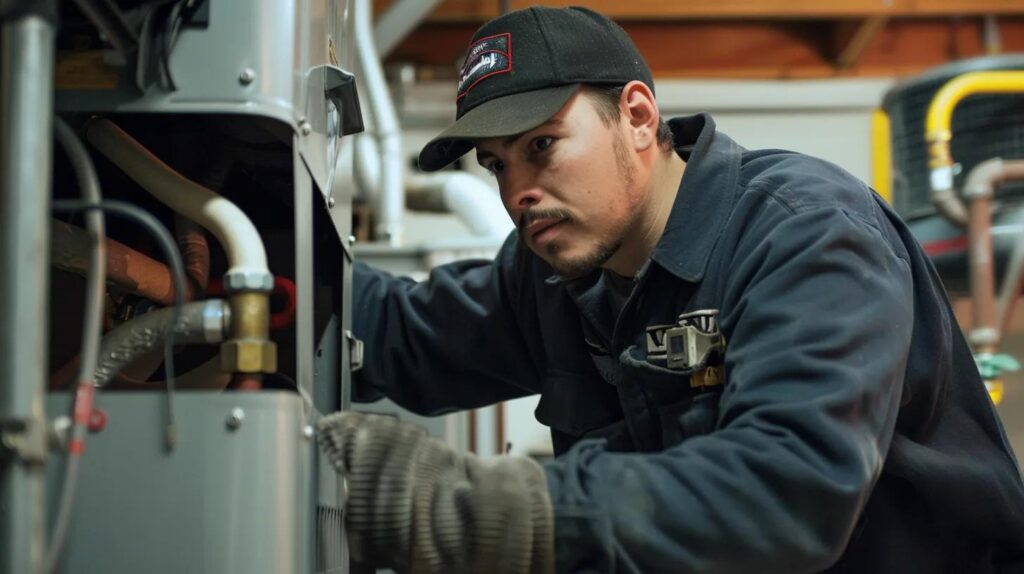
Upgrade Your Heating System for Efficiency: High‑Efficiency Furnaces, Heat Pump Advantages, and Smart Thermostat Solutions
Upgrading your heating system means getting the same—or better—comfort while using noticeably less energy. This guide walks Corsicana-area homeowners through how high-efficiency furnaces, modern heat pumps, and smart controls cut fuel use, lower bills, and keep your home comfortable year‑round. If you’re dealing with uneven rooms, rising heating costs, or aging equipment that’s costing you more than it should, targeted upgrades—better equipment, improved ductwork, and smarter controls—can fix those problems. We’ll explain AFUE and COP in plain terms, compare furnace and heat pump options for our local climate, and show how zoning and smart thermostats stop wasted energy. You’ll also get a clear look at typical costs, local rebates and financing paths, and the maintenance steps that keep efficiency high. Finally, we’ll help you decide when to repair versus replace so you can make a confident choice.
Why upgrade your heating system for energy efficiency?
Upgrading for efficiency means choosing equipment and practices that turn more of the energy you pay for into usable heat and less into waste. That happens through better combustion or compressor efficiency, improved heat transfer, and fewer distribution losses with duct sealing or zoning. The main benefits are lower utility bills, steadier indoor temperatures, and fewer emissions—benefits that also make your home more comfortable and marketable. Research and ENERGY STAR guidance show whole‑home heating upgrades can cut energy use roughly 20–50%, depending on your starting system and the home’s envelope.
Those measurable improvements help you decide which upgrades make the most sense. Here are the primary outcomes homeowners usually see:
- Lower energy bills: Less fuel or electricity use typically leads to a meaningful drop in annual heating costs.
- Improved comfort: Right‑sized equipment and better distribution give more even temperatures and better humidity control.
- Longer system life: Newer, high‑efficiency components run with less strain, so you see fewer breakdowns and longer service life.
Those results explain why many homeowners move forward with upgrades. Next we’ll look at practical furnace installation and replacement options.
Key benefits of energy‑efficient heating upgrades
Energy‑efficient upgrades lower operating costs by converting a bigger share of fuel or electricity into useful heat and cutting waste. You also get quieter, more consistent performance and finer control with modern thermostats or zoning. Environmentally, higher‑efficiency systems reduce on‑site emissions and make electrification through heat pumps more effective. In practice, pairing a high‑AFUE furnace or modern heat pump with sealed ducts and a smart thermostat multiplies savings beyond equipment alone.
Knowing these benefits helps you set priorities—whether you want to save money, improve comfort, or cut emissions—so you can choose the right upgrades. The next section explains how those choices affect bills and sizing for the best ROI.
How upgrades affect home comfort and utility bills
Upgrades influence comfort and bills through three linked elements: equipment efficiency, correct sizing/installation, and distribution performance. Higher AFUE or COP means less energy used per unit of heat. Proper sizing prevents short‑cycling and helps humidity control. And duct integrity and airflow determine whether equipment efficiency reaches every room—leaky or poorly insulated ducts can erase much of the benefit. For example, swapping an 80% AFUE furnace for a 95% AFUE model reduces fuel use proportionally; add duct sealing and household heating energy can drop substantially.
What are your options for high‑efficiency furnace installation and replacement?
High‑efficiency choices include higher‑AFUE non‑condensing models, condensing furnaces with secondary heat exchangers, and retrofit steps that improve existing systems without a full swap. These paths differ in installation complexity, venting needs, and expected savings—condensing furnaces usually offer the highest AFUE by reclaiming heat from exhaust gases. Whether to repair or replace depends on age, repair history, and remaining life; repeated major repairs on components like the heat exchanger often tip the balance toward replacement. The quick table below summarizes typical furnace types and AFUE ranges to help with selection.
A short comparison highlights how design relates to performance and installation considerations.
| Furnace Type | Characteristic | Typical AFUE |
|---|---|---|
| Standard non-condensing | Simpler venting and lower upfront cost | ~80% |
| Condensing high-efficiency | Secondary heat exchanger, PVC venting required | 90–98% |
| Retrofit improvements | Controls, sealing, tune‑ups to boost performance | Varies; improves existing AFUE |
That table explains why condensing units deliver higher efficiency and when retrofit work makes sense. Below we dig into AFUE and how it affects household savings.
How AFUE ratings influence furnace efficiency and savings
AFUE (Annual Fuel Utilization Efficiency) measures how much of the fuel’s energy becomes heat for the home over a year—higher is better. A 95% AFUE furnace turns 95% of fuel energy into heat while an 80% unit wastes about 20% to exhaust. The dollar savings depend on local fuel prices and run hours: in milder winters like Corsicana’s, heating loads are moderate, so payback depends a lot on fuel cost and installation price. To estimate payback, calculate your annual kBTU usage, apply the AFUE difference, and divide the incremental equipment cost by the annual fuel savings.
Knowing AFUE helps you decide when replacement pays off. Consider these decision factors when weighing repair versus replacement:
- System age and repair history: Older systems with frequent repairs usually favor replacement.
- AFUE improvement: Bigger efficiency gains shorten payback time.
- Duct condition: Leaky ducts reduce realized efficiency and may require sealing.
These points also influence the gas vs. electric choice covered next.
How does zoned heating improve savings and comfort?
Zoned heating divides your home into independently controlled areas using dampers and separate thermostats, so you only heat the rooms you use. That removes temperature imbalances between floors, cuts runtime, and reduces wear on equipment. Installation depends on compatible air handlers, duct layout, and the cost of dampers and control panels, but retrofitting is often cost‑effective for larger or multi‑story homes. Homeowners with different usage patterns across rooms or levels see the biggest comfort and savings gains from zoning.
Once you understand controls and zoning, it’s time to review costs, financing, and local incentives to make upgrades practical. For professional installation and system setup, Patriot Home Solutions Heating & Air Conditioning Services installs and configures smart thermostats and zone systems for homes and light commercial properties in Corsicana, Fairfield, Ennis, TX and nearby communities, and can assess compatibility with your existing HVAC and ductwork. If you’re ready to move from planning to action, contact Patriot Home Solutions Heating & Air Conditioning Services at (903) 229-3702 to ask about professional installation that maximizes comfort and efficiency.
What do heating system replacement costs and financing options look like in Corsicana, TX?
Estimating replacement costs for a high‑efficiency furnace or heat pump means adding equipment, labor, duct repairs, permits, and any electrical or gas work. Costs vary widely with system size and home complexity, so treat typical ranges as a starting point and get a site visit for an accurate quote that reflects insulation and duct condition. Financing options in 2024 include manufacturer programs, contractor financing, utility rebates, and federal tax credits for qualifying electrification projects—these can reduce upfront costs and speed payback. The list below highlights common cost drivers to consider when budgeting for replacement.
Weighing these factors helps you understand which parts of the investment deliver lasting energy savings.
- Equipment efficiency and capacity: Higher‑efficiency units cost more up front but usually save more each year.
- Ductwork repair or replacement: Sealing or resizing ducts can add expense but is vital for real performance.
- Electrical or gas work: Upgrading panels or gas lines increases complexity and cost.
Because financing and incentives change, Patriot Home Solutions Heating & Air Conditioning Services helps homeowners explore current promotions in Corsicana, including offers for veterans and first responders and in‑house financing that can make upgrades more affordable. Call (903) 229-3702 for the latest financing details and to schedule a site‑specific estimate that clarifies payback and ROI.
Typical installed cost for a high‑efficiency furnace or heat pump
Installed cost ranges depend on system type and home specifics. For planning, start with a broad bracket, then narrow it after an on‑site assessment. Major cost drivers are equipment brand and efficiency, ductwork repairs, electrical upgrades, and labor rates for installation and testing. Because home size and insulation affect required capacity, two similarly priced units can produce very different results on efficiency. An accurate estimate requires a load calculation, duct inspection, and a review of existing infrastructure to avoid undersizing or overspending.
Knowing these drivers helps you compare contractor proposals and prioritize the most effective upgrades. The next subsection outlines rebates and financing sources that may lower your out‑of‑pocket cost.
How does regular HVAC maintenance keep your heating system efficient?
Regular maintenance keeps systems running at peak efficiency: clean filters, properly adjusted burners or correct refrigerant charge, unobstructed airflow, and tight ductwork all matter. Preventive tune‑ups catch small issues before they become major repairs, reduce efficiency losses, and verify safe operation on combustion systems. A maintenance plan with annual professional inspections, scheduled filter changes, and periodic duct checks helps systems operate closer to rated AFUE or COP and reduces unplanned downtime. Below is a short checklist of the most important maintenance items.
Consistent maintenance protects equipment value and helps your system run longer and more efficiently. The following paragraphs explain duct sealing and tune‑up frequency.
- Annual professional inspection: Full check of combustion, airflow, controls, and safety systems.
- Filter changes: Replace filters every 1–3 months depending on type and household needs.
- Duct sealing and insulation: Fix leaks and insulate ducts in unconditioned spaces to prevent energy loss.
Following this checklist delivers measurable efficiency gains and makes performance comparisons more accurate when deciding between repair and replacement.
Why duct sealing and insulation matter for efficiency
Duct sealing and insulation fix distribution losses that can undo equipment efficiency improvements by letting heated air escape into attics, crawlspaces, or wall cavities. Older homes commonly have 10–30% duct leakage—translating to big energy waste and cold spots. Sealing and insulating ducts recovers much of that lost energy. Signs of duct problems include high energy bills, noticeable cold spots, and dust around vents; a professional duct test will quantify leakage. Fixing ducts increases the effective AFUE or COP you actually feel and can shorten payback on equipment upgrades.
Recognizing duct losses means including distribution fixes in your upgrade budget instead of focusing only on new equipment. Next we explain how often to schedule tune‑ups.
How often should you schedule heating system tune‑ups?
Schedule a professional tune‑up at least once a year—ideally in the fall before the cold season—to verify safe, efficient operation and catch issues early. Between professional visits, keep an eye on filters and make sure vents aren’t blocked. A full tune‑up usually includes cleaning burners or heat exchangers, checking refrigerant charge (for heat pumps), measuring airflow, calibrating the thermostat, and running safety tests. Regular tune‑ups reduce emergency repairs, support warranty requirements for many manufacturers, and help preserve the real‑world efficiency of high‑AFUE furnaces and modern heat pumps.
Routine professional maintenance pairs well with efficiency upgrades and keeps expectations aligned with actual performance. For reliable local maintenance, Patriot Home Solutions Heating & Air Conditioning Services offers tune‑ups and duct sealing across Corsicana, Fairfield, Ennis, TX and surrounding areas—call (903) 229-3702 to ask about maintenance plans and scheduling.
US Residential Gas Furnace Efficiency: Energy Savings and AFUE Ratings
Most U.S. homes use a central gas furnace and ducts to distribute heated air. The furnace blower’s electricity use is meaningful—comparable to a major household appliance—and runs year‑round because the same blower circulates cooled air in summer. Improvements to fans and motors can therefore save electricity across seasons. Current rules require new residential gas furnaces to meet at least 78% AFUE, and nearly all furnaces sold today are 80% AFUE or higher.
Frequently Asked Questions
What should I consider when choosing between a gas furnace and a heat pump?
Think about energy efficiency, operating costs, fuel availability, and how you use your home. Gas furnaces can be cheaper to run where natural gas is inexpensive, while heat pumps offer better seasonal efficiency and also handle cooling. Look at future trends—electrification incentives and utility programs can make heat pumps more attractive over time.
How can I tell if my ductwork needs sealing or insulation?
Watch for uneven temperatures, higher energy bills, or dust around vents. Those are common signs of duct leaks. A professional duct test will measure leakage and point out where repairs are needed. Sealing and insulating ducts often delivers big, cost‑effective efficiency gains.
What maintenance tasks matter most for heating efficiency?
Prioritize regular filter changes (every 1–3 months), an annual professional inspection, and duct sealing or insulation as needed. These steps preserve airflow, prevent issues, and keep your system running efficiently—saving you money and extending equipment life.
Are there energy efficiency incentives available in Corsicana?
Yes—homeowners may qualify for federal tax credits for heat pumps and utilities sometimes offer rebates for high‑efficiency equipment or duct sealing. State and local programs vary, so check with your contractor or utility for current availability and eligibility.
How do smart thermostats help save energy?
Smart thermostats learn your schedule, use geofencing and remote access, and provide energy reports that identify savings opportunities. By adjusting temperatures automatically and avoiding unnecessary runtime, they reduce energy use and improve comfort.
What lifespan can I expect from a high‑efficiency furnace or heat pump?
High‑efficiency furnaces typically last 15–20 years; heat pumps usually last about 10–15 years depending on use and maintenance. Regular tune‑ups and proper installation are key to maximizing lifespan.
How do I decide whether to repair or replace my heating system?
Consider the system’s age, repair frequency, and efficiency. Systems older than about 15 years that require frequent repairs are often better replaced. Compare ongoing repair costs against the expected energy savings from a new, high‑efficiency model and get a professional assessment to guide the decision.
Conclusion
Upgrading your heating system improves comfort, cuts energy bills, and makes your home more efficient. High‑efficiency furnaces, modern heat pumps, and smart thermostats each offer measurable benefits—especially when paired with ductwork improvements and routine maintenance. With clear information on costs, incentives, and payback, you can choose upgrades that match your priorities. For local guidance and professional installation, reach out to Patriot Home Solutions today.